No one makes plans with friends and gets dressed up for a fun night out thinking Tonight’s the night I drive drunk.

Most people are law-abiding, conscientious and considerate of the safety of others, particularly when it comes to risk-taking. No one wakes up planning to put others in harm’s way, or themselves, for that matter.
So why are there currently more than 500 impaired driving road deaths in Canada each year, and countless more injuries? Honestly, there isn’t one simple answer.
The first reason is perhaps the most obvious one; alcohol messes with the brain by lowering inhibitions and clouding judgment as well as the ability to objectively assess situations. In other words, ideas that sound ridiculous and even dangerous when we’re stone cold sober suddenly seem fun and surely possible after a few drinks.
The science behind impairment
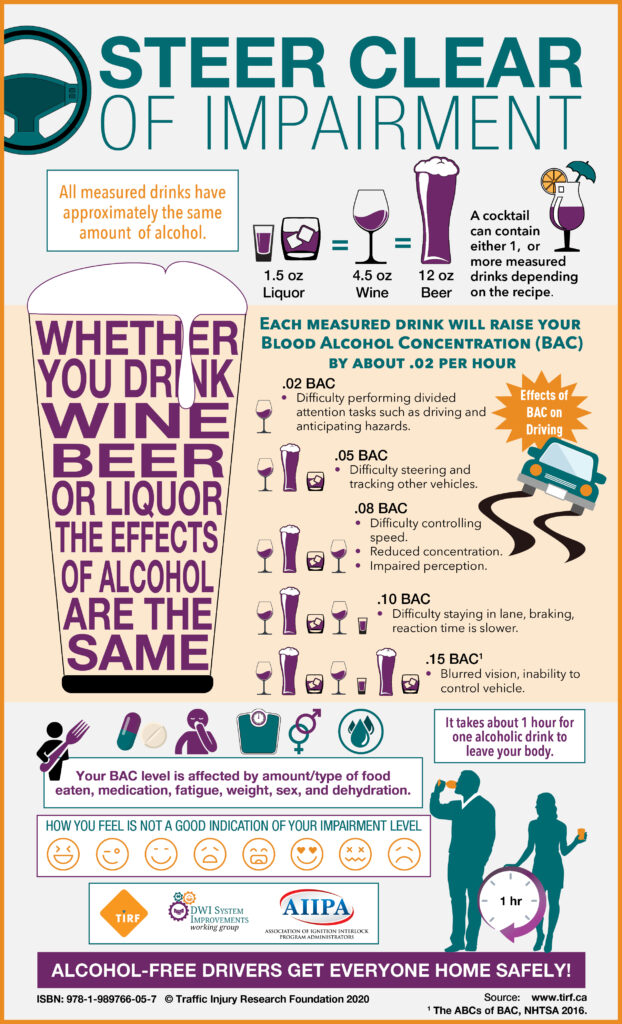
Science backs this up. At about .02 blood alcohol concentration (BAC), the ability to make sound decisions using good judgment starts to slip. By .05, alertness degrades along with the ability to focus on a task or anticipate risk, like trying to send a simple text and somehow rereading it five times while still missing the painfully obvious autocorrect disaster staring back at you. At .08, self-control, reasoning, memory and motor coordination are rapidly going downhill. By .10, thinking slows, coordination tanks, and reaction time is lagging way behind.
Want to know how this translates to navigating roadways? Well, it looks like this: After one standard drink (.02 BAC), drivers typically have difficulty performing divided attention tasks such as driving and anticipating hazards. Three standard drinks (.05 BAC) make it more challenging to steer and track other vehicles. After four drinks (.08 BAC), drivers have difficulty controlling speed and have trouble concentrating on a task. Problems staying within a lane and slower braking are common after five standard drinks (BAC .10).
The Mellanby Effect explained
But the first thing alcohol takes from you is judgment. Once that’s gone, all kinds of things (none of which were planned) can happen. We dance like no one’s watching, miraculously summon the courage to talk to that 10 across the room, do shots we definitely don’t need…and sometimes decide we’re fine to drive home.
Some of those decisions may ultimately be harmless, turning into funny stories your friends never let you live down. Others can be anything but funny; the ones that can permanently change lives, and that you will remember for a lifetime, while desperately wishing you didn’t.
There’s also another less obvious but common reason people end up driving when they shouldn’t, and it’s a bit more complicated. It’s called the Mellanby Effect. Don’t worry, no high school science test required.
It goes like this. As you consume alcohol, it’s immediately absorbed in your body. Some in your stomach (depending on how much and what you’ve eaten), but more passes into your bloodstream. This is why you can feel the effects almost immediately. And you also notice the impairing effects because you were sober when you started. You can tell you feel different. And as you drink, your BAC goes up. The more you drink, the higher it goes.
But here’s the thing. When you stop drinking, your BAC is still going up. After your last drink, your level of impairment will continue to increase as your body absorbs that alcohol into your bloodstream.
And here’s the catch; once the last drink is fully absorbed, your BAC will start to decline. But it doesn’t decline as quickly as it went up. And as it declines and that buzz starts to fade, your perception changes, and you start to feel better, even though alcohol is still in your system.
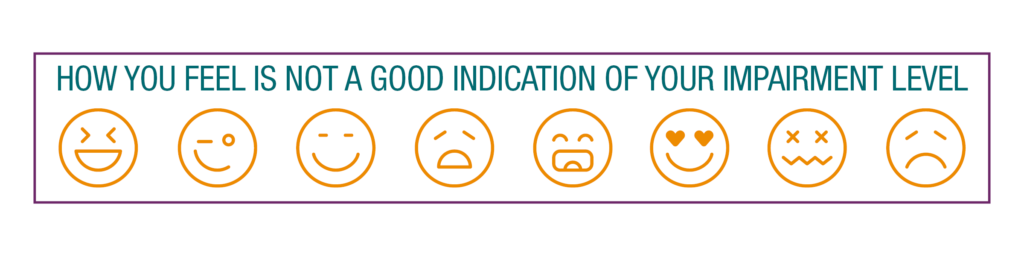
That doesn’t mean you are sober. It just means you’re less impaired than you were a short while ago.
For example, let’s say early in the night you’ve had about 2 standard drinks and your BAC is .04 and climbing. You feel it. Later, after another standard drink or two, your BAC peaks around .08, then you stop drinking. As your body eliminates alcohol and you drop back down to .04, you actually feel more sober than you did earlier in the night at the exact same BAC when it was rising.
Why? Because your brain is comparing how you feel now to how you felt at .08, not how you felt when you were completely sober at .00.
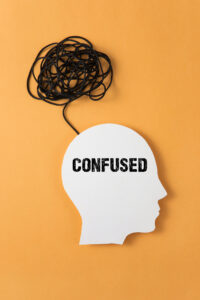 In other words, your body adapts while your brain shrugs and says, Well, I don’t feel as drunk anymore, so I must be good. Spoiler: you’re not.
This plays out perfectly in alcohol workshops police run during impaired driving training. These are double-blind sessions. This means officers don’t know how much the volunteers drank, and the volunteers don’t know either.
Early on, when volunteers are barely at .01–.02 BAC, they’re asked if they’d drive. The answer is almost always a loud, confident, H**L NO. As the night goes on and they drink more, the answer might get a little slurred, but it’s still an absolute no.
Then their BAC peaks around .08–.10, and all alcohol is taken away. For the next hour or two, student officers run standardized field sobriety tests while the volunteers’ bodies slowly eliminate alcohol.
At the end, we ask the volunteers again: Would you drive right now?
And this is where things get interesting.
Suddenly, we hear answers like, I know I should say no, but I probably would, or I feel fine, so yeah, or I’d consider it. Then we tell them their BAC, and they’re shocked. They’re still at .04–.06, sometimes even higher.
Who’s driving impaired & why
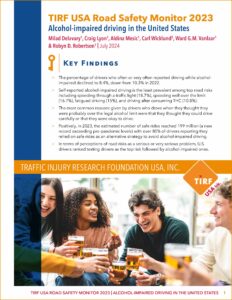 A 2023 survey asked American drivers who admitted to driving over the legal limit why they did it. Nearly 1 in 4 (23.1%) said they thought they could drive carefully, just about one-fifth (17%) just thought they were fine, another almost one-fifth (15%) figured they wouldn’t get caught, and less than one in ten (7%) said they had no other way home. Here’s the problem: alcohol impairs the part of your brain that would tell you something’s wrong. That confidence you feel? That’s the alcohol talking. The fix is simple … make a plan before you drink, because your drunk self is the last one you should be asking for driving advice.
So why did they go from H*LL NO at .01–.02 to I feel fine at .04–.06?
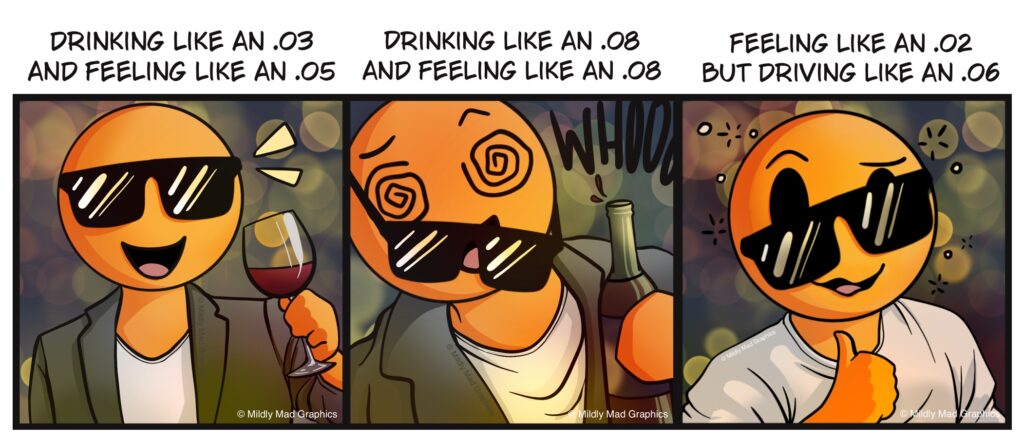
This, my friends, IS the Mellanby Effect. Their bodies got used to functioning at a higher BAC, so suddenly the lower BAC feels more sober. And it is, but that’s not the same thing as being sober.
But no need to memorize all the science. There are two simple takeaways to stick in your brain:
- Your body absorbs alcohol a lot faster than it eliminates it; it takes minutes to absorb the alcohol in a standard drink, but it’s almost an hour to eliminate a single drink. If you had 5 drinks, think about 5 hours before you’re back to .00. And before you ask, the answer is NO. Nothing speeds up the elimination of alcohol. Not coffee, not exercise, not a cold shower. The only thing that eliminates alcohol from your body is time.
- People are terrible at gauging their own level of impairment once they start drinking. When someone else tells you you’re in no shape to drive, BELIEVE THEM.
Simple steps to avoid driving after drinking
 So next time you’re out for drinks with friends, or having a few with dinner, remember this: just like thinking you’re absolutely crushing the latest TikTok dance trend after a few drinks, when in reality you look like you’re having a medical emergency, thinking you’re good to drive might just be alcohol-fuelled bad judgment doing its thing.
Start your night with good intentions and end it the same way. Plan a ride home. Call a friend. Grab a cab. Use a rideshare. Do whatever you need to do.
Because sometimes our perceptions can’t be trusted. But a safe ride home? That’s always a solid choice.
Takeaways:
- After hours of drinking, your sense of normal is skewed, your brain’s baseline is off.
- Youth messaging: Even if you think you’ve sobered up, your brain is still impaired.
- Parent messaging: Reinforce to teens that self-assessment is unreliable; this isn’t about judgment, it’s about biology.
#MySafeRoadHome authors: Sgt. Shannon Gordon, Traffic Safety Unit, Regina Police Service, Regina, Saskatchewan; Kylee Bowman, Lead, TIRF Youth Advisor Program; and Robyn Robertson, TIRF President & CEO, worked collaboratively on this blog. Sgt. Shannon Gordon is a 25-year member of the Regina Police Service in Saskatchewan. She has been a Standardized Field Sobriety instructor and a Drug Recognition Expert Instructor for over 15 years. She is passionate about road safety. Kylee Bowman, TIRF Lead, Youth Advisor Program (TIRF YAP) taps into the views, experiences and attitudes of young road users and helps TIRF develop educational strategies and communicate risks in ways that are relatable and engaging for young audiences. Kylee was crash-involved as an 8-year-old, and since 2011, she has been part of TIRF’s Drop It And Drive® (DIAD) education program. Robyn Robertson, TIRF President & CEO, collaborates with Kylee to blend the youth perspective with her background as a criminologist with 25 years of experience in road safety research. Robyn authored TIRF’s knowledge translation model and is well-versed in implementation strategies and operational practices across several sectors.
Source documents & resources:
Holland MG, Ferner RE. A systematic review of the evidence for acute tolerance to alcohol – the “Mellanby effect”. Clin Toxicol (Phila). 2017 Jul;55(6):545-556. doi: 10.1080/15563650.2017.1296576. Epub 2017 Mar 9. PMID: 28277803.
Delavary, M., Lyon, C., Mesic, A., Wicklund, C., Vanlaar, W. G. M., & Robertson, R. D. (2024, July). Alcohol-impaired driving in the United States (TIRF USA Road Safety Monitor 2023). Traffic Injury Research Foundation USA, Inc. https://tirf.us/download/rsm2023-alcohol-impaired-driving-united-states
Traffic Injury Research Foundation. (n.d.). Sober Smart Driving. https://sobersmartdriving.tirf.ca/
Traffic Injury Research Foundation. (n.d.). Myths & misconceptions [Fact sheet]. Sober Smart Driving. https://sobersmartdriving.tirf.ca/topic-areas/myths-misconceptions/
Traffic Injury Research Foundation. (n.d.). Alcohol & the body [Fact sheet]. Sober Smart Driving. https://sobersmartdriving.tirf.ca/topic-areas/alcohol-the-body/
Traffic Injury Research Foundation. (2023, September). Alcohol, other drugs & driving: Know the facts. Impaired Driving Coalition of Canada. https://tirf.ca/download/idcc-alcohol-other-drugs-driving