A Mother’s Mantra – Road safety lessons to last a lifetime
 In honour of Mother’s Day, let’s pause and pay tribute to the mother’s mantra. I’m talking about those messages from Mom about being safe and avoiding risk. You, like me, have probably heard Mom say at least once or perhaps a hundred times.
- It’s not a race
- Follow the rules & pay attention
- If your friend jumped off a bridge…
- Are you listening?
- Look after each other
Ideally, these repetitive lessons lead to ingrained behaviours that become predictable and reduce risk. This is fundamental as parents begin the process of allowing their children to walk or bike themselves to school. At some point, we have to trust that the years spent creating entrenched, habitual and properly executed behaviours to increase safety will remain even in the absence of supervision. Without a doubt, these lessons helped us all avoid injury on more than one occasion and probably prevented a few catastrophes as well.
It’s not a race
 From our earliest memories, Mothers impressed upon us the risks posed by speed. Whether you were running through the house, riding your bike, or learning to drive, the two words most often heard from our mothers’ lips (and yes, dads’ too) were slow down! In our dash to be first, to finish first, or to get there first, we were often oblivious to our surroundings. We simply didn’t see the sharp corners, the hard surfaces and fragile Great Aunt Dorothy in our path.
Some belief systems shifted to riskier behaviours during the pandemic with a marked increase in excessive speeding, distraction and impaired driving among those who reportedly had not done so pre-pandemic. While many of these trends have slowly rebounded with risk gradually declining; it has not been the case for some drivers.. Sadly, some chose to continue with these high-risk choices at the wheel, especially in jurisdictions where speed enforcement cameras have been removed. We have also witnessed other concerning policy changes, including proposals to increase speed limits and the erosion of requirements for young drivers to pass the road test, or the elimination of the exit test entirely.

Being adults does not make us immune to injury despite the false sense of security created by the hard exterior of our vehicles. This is even more true for young drivers whose young age and inexperience make them more prone to take risks. Speed, distraction and impaired driving can also place others at risk, including the many cyclists and pedestrians who lack a protective exterior. More concerning, older pedestrians, who represent a rapidly growing segment of our population, are more fragile and may never recover from a collision, whereas younger children are inexperienced and high-spirited, meaning they may lack the situational awareness of their surroundings. So, while it may be tempting to take advantage of the open road, listen to your mother and slow down.
Follow the rules & pay attention
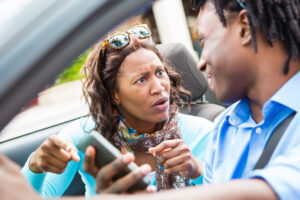 Most mothers are also really big on the rules. Not only are they put in place to keep us safe, but they are also designed to create equity and fairness. While some of us might think there are too many rules at times, who can really argue with the importance of them? Irrespective of whether those rules were part of a game, or in the classroom, or even the unwritten rules of taking off your shoes when you visit your neighbour, we avoided at all costs the shame if our mother found out we were breaking those rules.
I’m pretty sure mothers would agree rules of the road are no different. Impaired driving laws, speed limits, cell phone bans, and seatbelts are there to keep us safe; so are traffic signals, turn signals, crosswalks and dedicated lanes for cyclists. Rules increase safety by prohibiting unsafe behaviours or conditions that increase risk. Even if we don’t see the risk, you can be sure it’s there.
More importantly, rules create predictable behaviour, making us confident drivers will stop at red lights, signal their turns, and yield right of way as expected. Similarly, rules mean drivers will slow down in school zones and areas with more cyclists and pedestrians. But any mother would agree, you still have to pay attention. We humans are, well, human. That’s why following the rules goes hand in hand with paying attention. We make mistakes. The overwhelming majority of deaths and injuries on our roads are preventable. Paying attention enables us to be forgiving in those unexpected circumstances when things go wrong by being prepared to stop. Being sober, alert and traveling at the posted speed limit means we will have the time and distance necessary to stop before a crash. The difference between a collision and a near miss is measured in millimeters and milliseconds.
However, what remains predictable are the consequences of unsafe driving, particularly when it comes to pedestrian-vehicle collisions. A 2020 study out of Toronto reported, “The chance of surviving a collision with a motor vehicle travelling at 50 km/h is less than 20%; whereas, survival increases to 50% at 40-45 km/h and 90% at 30 km/h.” While behaviours may be unpredictable at times, the laws of physics most definitely are not.
If your friend jumped off a bridge…

Like you, I probably heard this adage from my mother more than once (and maybe a 1,000 times if you asked her). For those of us unable, albeit unwisely, to resist cheeky comebacks, “Sure, I’ve always wanted to bungee jump!” would invariably lead to the look (yes, that look).
As children, we felt a lot of pressure to keep up with our peers and do everything our friends did. Let’s be honest; safety didn’t always weigh into those decisions. But it sure did for moms, as their superpower lets them see all the risks and things that may go wrong. Sure, we railed against the disappointment of not being allowed to go to that party or take that road trip (it’s Canada; everybody takes road trips). And Mom was right; it really wasn’t the end of the world.
But it is about choices. Learning to make good choices and avoid or at least minimize risk is a goal every mother has for her children. Undoubtedly, they would agree that some of us are more successful than others when it comes to our behaviours on the road. Not a day goes by without reading a headline about someone speeding, impaired, distracted, or someone just not following the rules. These almost daily occurrences have ceased to surprise us when we witness them on our travels.
Fortunately, they are the minority, and just because others do it doesn’t mean we should throw up our hands and join them. More than 80% of Canadians don’t drink and drive, more than 90% wear their seatbelt, and concern about distracted driving is substantial. While recent news reports have highlighted some extreme risk-taking on the roads, it’s not the norm. Speaking up and making safe choices on the road every day effectively sends a message to those rulebreakers our mother would be proud of – shame on you. Research shows our behaviour influences the behaviours of those around us.
Are you listening?
 I know you have heard these safety messages before and may even be a little tired of them. It’s usually around this point eyerolling begins in response to what is perceived to be a lecture, which would then queue the are you listening to me response, to which the answer is always YES! (even if you have to fake it until you catch up with the conversation). I know I’ve been shocked on more than one occasion to hear my mother’s words of wisdom about safety roll right out of my mouth like they were my own, and I’m not alone. People of all ages in all communities are more vocal about road safety and the responsibility we share to protect each other. Eliminating deaths and serious injuries on our roads to achieve Vision Zero is possible, but everyone must do their part.
Look after each other
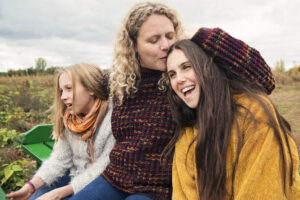 Perhaps the most powerful message from mothers we should all live by is, look after each other. The greatest gift we can give our mothers, on Mother’s Day and every day, is a commitment to stay safe and protect others every time we use the road. It’s a gift that costs nothing but gives everything.
Whether driving, cycling or walking, whether young or old, whether travelling for work or leisure, we all want to get home safely to our families and hug our moms. So, what greater gift can we offer our mothers than the knowledge that the years they spent teaching us to stay safe actually stuck.
And, just in time because you know what your mother would say…
“You are not invincible.”
#MySafeRoadHome blog authors: Robyn Robertson, TIRF President & CEO and Karen Bowman, Director, Drop It And Drive® (DIAD) program, work collaboratively as co-authors, drawing from Robyn’s breadth of knowledge on topics alongside Karen’s blogging background and experience leading the DIAD program since 2010. Robyn is the author of TIRF’s knowledge translation model, is well-versed in implementation strategies and operational practices across several sectors. To date, the DIAD program has been delivered to over 60,000 youth and workers across North America.
References:
580 CFRA. (2026, April 18). CFRA weekends: New data says speed compliance in school zones is taking a back seat in Ottawa [Audio podcast episode]. iHeartRadio. https://www.iheart.com/podcast/962-cfra-live-full-audio-160676206/episode/cfra-weekends-new-data-says-330760397/
Bellefontaine, M. (2021, January 14). COVID-19: Number of photo radar tickets issued in Edmonton up 17 per cent in 2020 as city calls for ability to seize vehicles. Edmonton Journal. https://edmontonjournal.com/news/local-news/covid-19-edmonton-photo-radar/
Fridman, L., Rothman, L., Ling, R., Cloutier, M.-S., Macarthur, C., Howard, A., & Zemek, R. (2020). Effect of reducing the posted speed limit to 30 km per hour on pedestrian motor vehicle collisions in Toronto, Canada: A quasi-experimental, pre-post study. BMC Public Health, 20, Article 56. https://doi.org/10.1186/s12889-019-8139-5
Traffic Injury Research Foundation. (n.d.). Action2Zero School Safety Assessment Tool (SSAT). https://act2zero.tirf.ca/schools/
Traffic Injury Research Foundation. (n.d.). Seatbelts [Fact sheet]. Brain on Board. https://brainonboard.ca/safety-features/seatbelts
Woods-Fry, H., Vanlaar, W. G. M., & Robertson, R. D. (2021). COVID-19 Road Safety Monitor 2021: The Impact of the Pandemic on Road Safety and Mobility [Fact sheet]. Traffic Injury Research Foundation. https://tirf.ca/download/covid19-rsm2021-impact-road-safety-mobility/
Vanlaar, W. G. M., Robertson, R. D., Delavary, M., Lyon, C. & Barrett, H. (2025). Road Safety Monitor 2025: Drinking & driving in Canada [Fact sheet]. Traffic Injury Research Foundation. https://tirf.ca/news/canada-uptick-impaired-driving/
Related topics:
 |
 |
 |
 |