Sharing tips on staying safe, woman to woman

Our first foray into blogging in 2018 was a four-part series for women about their unique experiences, perspectives and safety considerations when it comes to drinking and driving. Fast forward post-pandemic and a lot has changed, including where and with whom people are drinking. In 2025, two in five (40%) of Canadian drivers reported doing most of their drinking with close friends. So next time you are sharing some drinks, here is a topic for discussion.
For many women, safety isn’t just a priority, it’s a lifestyle. Being aware of surroundings, letting someone know where we’re going, and texting when we get home is akin to breathing. Caution is second nature when it comes to who we trust and what we share. Safety is our first thought in almost any situation, which may come as a surprise to men who have crossed a parking lot, gone to the market at night, or met a stranger for coffee with personal safety never crossing their mind.
This is also true when it comes to strategies to avoid driving after drinking. But while we are quite comfortable, and even vocal when it comes to sharing personal safety strategies, we are more reluctant to talk about safe options for a ride home after a night out drinking (Robertson & Ireland 2016).
This blog explores reasons we can be reluctant to speak, why it persists, and how real conversations about getting home safely can help shift habits and protect those we care about…including ourselves.
When getting home safe means choosing between risks
We’ve all heard the age-old adage don’t drink & drive just as the ever-familiar friends don’t let friends drive drunk rings in our ears. All the responsible alternatives, echoing through generations seem perfectly sensible. Take public transit. Call a cab. Use a rideshare. Stay the night. On paper, the simple logic of these solutions is entirely reasonable. Right?
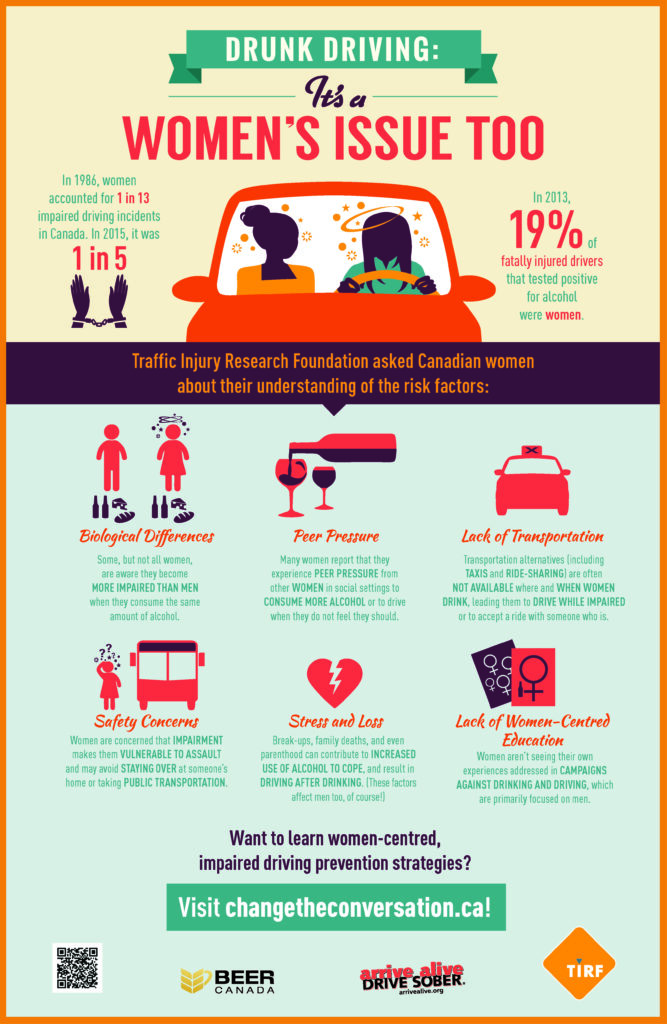
Wrong. For many women, these alternatives don’t always pass the safety test. Research shows women are reluctant to take public transportation, take a cab, or take a ride from someone they don’t know well, especially after they have been drinking. Women’s perceptions about these options are different. There is no point tiptoeing around that fact. We know alcohol lowers inhibitions, makes us less vigilant and more vulnerable. So, while traditional alternatives to driving after drinking might be safer in terms of traffic risk, they don’t add up when it comes to personal safety.
The unfortunate reality is that some women choose to drive themselves home after drinking because it feels like the lesser of two evils. Opting for the perceived control associated with getting behind the wheel after drinking seems safer than the absence of control resulting from being alone with a stranger in a vehicle or entirely reliant on someone they don’t know well.
This no-win situation has contributed to increases in impaired driving among women. In 2023, women accounted for 23% of persons found guilty of impaired driving within Canadian courts, an increase from 15% in 2005 (Statistics Canada, 2025).
Instead of finding ourselves having to choose between two equally undesirable options, women need to ask how do we avoid this untenable situation in the first place?
Women cannot metabolize alcohol as quickly as men and have less water in our bodies which means we get more impaired with less alcohol. And even with just a few drinks, the impairing effects of alcohol undermines our ability to drive safely because it decreases situational awareness, cognitive processing and reaction times (Sober Smart Driving). Our ability to drive safely is further compromised when we pair alcohol with cannabis, whether it’s via edible, vape, or joint.
Saying I can when we really mean I can’t

Peer pressure can also influence our decision-making. We feel obliged to help, to go along, and not rock the boat. From a young age, girls are often praised for being helpful, accommodating, agreeable. We learn to say yes even when it’s inconvenient or we know we shouldn’t. Over time, the instinct to say sure, no problem becomes almost automatic. We tell ourselves I don’t want to be a problem; I don’t want to ruin the vibe, or Everyone is counting on me.
Peer pressure doesn’t disappear when we grow up; it just looks different.
Women often have trouble pushing back in uncomfortable moments, and that can spill over into risky situations. Research from the Traffic Injury Research Foundation shows women’s choices in these situations can be influenced by peer pressure. Not only do women report feeling pressure from friends to continue drinking; they also report feeling obliged to be the designated driver, even when they don’t feel safe to drive.
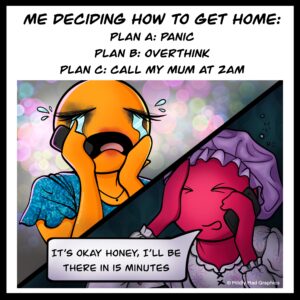
If your designated driver decides to drink, what happens? Do you shrug and get in the car anyway? Do you think, It’s not that far; it’ll be fine? Or do you say, I’m not comfortable with this. I’m going to call a friend? In those moments, saying I can’t can feel uncomfortable, inconvenient, or even disloyal. But when safety is at stake, staying silent comes with far more than a momentary cost. We need to recognize that speaking up, even if it creates tension, can literally save lives. A late-night phone call waking someone up to come get you is far better than the call they might get later from police or a hospital.
Don’t forget the What if…..before you drink

The question What if? is a familiar refrain. It reverberates in our head daily as we weigh risks and anticipate consequences in many situations. But when it comes to driving, most of us never consider what if? This is because driving is rote; we do it almost without thinking, or so it seems. Every day, without incident, we drive to work, appointments, stores, and to meet friends at social events. Over time, we start to see ourselves as safe, careful drivers. Near misses are easily forgotten; dismissed as someone else’s fault. We get used to nothing bad happening; it almost seems impossible. But that feeling of confidence and safety makes us forget that driving is a complex task requiring the synchronized interplay of manual, visual and cognitive skills. It can also trick us into underestimating the risks of driving after drinking.
Research based on focus groups with hundreds of women convicted of impaired driving revealed some women didn’t truly consider the possibility of being stopped, charged, or involved in a serious crash before they drove. In the pressure of the deciding moment, across a wide range of circumstances and situations, the question What if I get stopped, or arrested, or I crash? never crossed their mind. Alcohol lowers inhibition, affects judgement, planning and self-awareness. It doesn’t just slow reaction time and coordination; it also affects how we assess our own impairment. They believed they were fine; not understanding that how you feel is not a good indicator because ……You. Are. Impaired.
And for the other women who did ask themselves What if? in the moment; the answer was simple. Driving after drinking seemed like the safer choice; to avoid being vulnerable, a bad situation or getting in a car with a stranger or someone they didn’t know well. They just wanted to get home.
So, how do we actually stay safe?
Balancing personal safety, social pressure, stress, and road safety is complex. But small, practical choices and supportive conversations can make a real difference.
1. Plan your ride home before you go out
 We put effort into which restaurant we’re choosing, who’s hosting, or who’s invited? We check menus, assign items to bring and how to get there. The same amount of attention and effort should go into deciding how to get home, and what is the Plan B if things go awry?
Safe strategies to consider include:
- Go out and come home as a group when possible.
- Decide on a designated driver (a.k.a. sober driver) before the night begins and commit to supporting that person in not drinking. Stock up on favourite non-alcoholic options.
- Arrange to stay overnight with a friend or family member if you plan on drinking.
- Ask someone you trust if they’re willing to be your backup ride.
- If using a rideshare service like Uber or Lyft, use the Share Trip Status feature to share your ride information with a family member or friend who can see where you are in real time, as well as the driver and vehicle information.
 2. Give yourself permission to say I can’t
We need to normalize choosing safety, even if it feels inconvenient. This might mean speaking up and saying:
- “I can’t be the designated driver tonight; I plan to drink.”
- “I don’t feel comfortable getting in the car if you’ve been drinking.”
- “I’m going to call someone else for a ride instead.”
- “I promised myself I wouldn’t drive after drinking, and I’m sticking to it.”
People might grumble or roll their eyes; but the next morning they’ll thank you. Your safety, and everyone else’s, is more important than a few moments of awkwardness.
 3. Be the friend who speaks up
Women can be powerful allies to each other. We don’t have to lecture but can simply show concern and offer alternatives when we notice something’s off.
You can:
- Ask: “Do you have a safe way to get home?”
- Offer: “I already have a safe ride, come with me.”
- Step in: “You’ve had a few drinks. Let’s figure out another option.”
If in doubt …don’t

At the end of the day, women are trying to stay safe in a world that asks a lot of us. We need to be capable, accommodating, responsible, high-performing, and in control, and it can be a heavy load to carry. The decision about driving after drinking doesn’t have to be complicated. It can be guided by two simple rules:
- If you’re in doubt about your ability to drive safely, don’t.
- If you’re in doubt about your driver’s sobriety, don’t get in.
Call someone. Stay over. Wait. Ask for help. Offer help. Be the person who says, “I can’t,” even when everyone expects you to say, “I’m fine.”
When we support each other, speak up, and choose safety over convenience, we don’t just prevent impaired driving, we protect futures, families, and lives. And that is worth every awkward conversation and late-night phone call.
#MySafeRoadHome blog authors: Hannah Barrett, TIRF Researcher & Program Manager, is a criminologist and specializes in alcohol ignition interlock programs, wildlife-vehicle collisions, and impaired driving countermeasures.
Source documents & resources:
Robertson, R. D. & Ireland, L. (2016). Drinking & driving among women in Ontario: A qualitative study. Traffic Injury Research Foundation, Ottawa: ON. https://tirf.ca/projects/drinking-driving-among-women-in-ontario-a-qualitative-study/
Statistics Canada. Table 35-10-0030-01 Adult criminal courts, guilty cases by type of sentence
Related topics:
 |
 |
 |
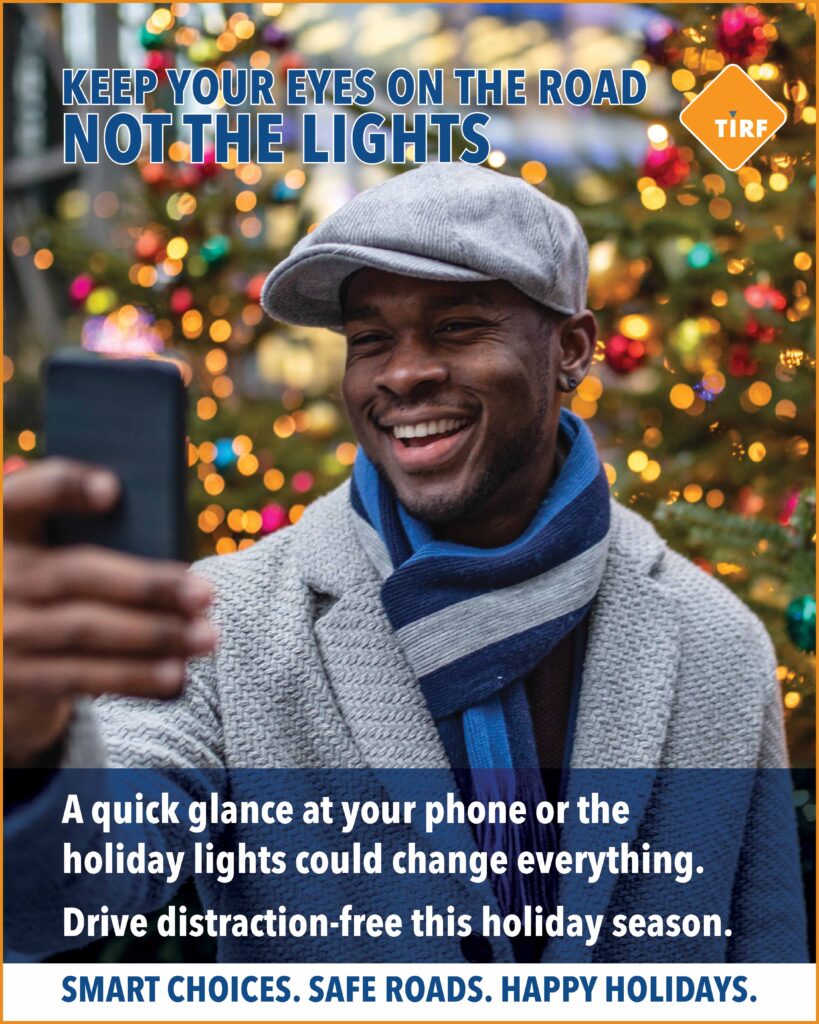
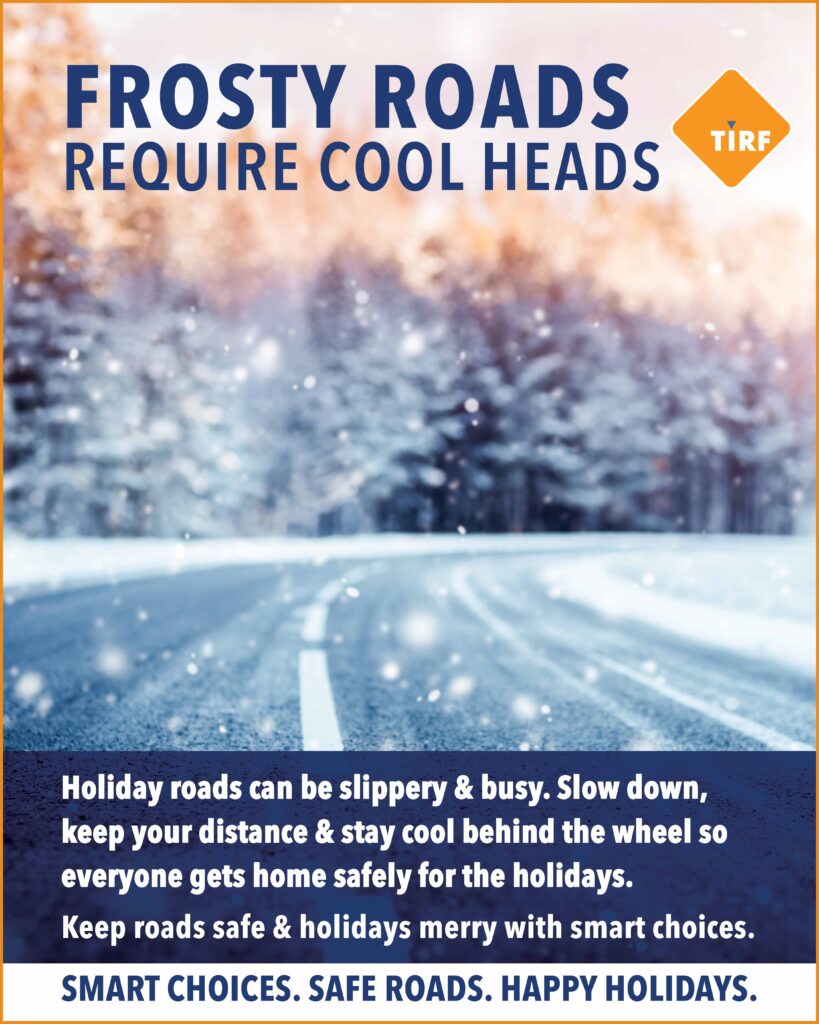
Also, check out, download & share our 2025 holiday ads:
 |
 |
 |
 |
 |