When people hear the term impaired driving, they often assume it was simply a bad decision or a mistake in a moment gone wrong. They may chalk it up as the consequence of poor planning or an unlucky circumstance. Many of us can think back to a time when we or someone we knew said, I’m fine, it’s not that far, or I’ll take the backroads, nothing’s ever happened. These moments feel familiar, almost ordinary, harmless even; until they aren’t. And this neglects an undeniable truth: impaired driving is not an accident; it is the consequence of a series of decisions made long before a crash ever occurs.
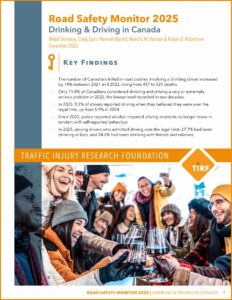
Acknowledging impaired driving is a decision, and not a random, ill-fated mishap, changes how we talk about responsibility, prevention, and accountability. It shifts the focus from chance to choice, and from inevitable to impossible. In 2022, more than 500 Canadians were killed in road crashes involving a drinking driver, which is a startling 14% increase from 457 in 2021).
Understanding impaired driving
Impaired driving is the result of a person driving a vehicle while their ability to safely do so is knowingly compromised. Impairment often shows up quietly. You may not notice your responses and reactions are a little slower or a little off. You may feel a misplaced confidence in your capabilities in that moment, although everything may seem normal enough. The truth is impairment begins the moment judgment, reaction time, coordination, or attention are diminished. When that first sensation of impairment hits you, it’s noticeable because even small amounts of alcohol or drugs can affect driving ability. But then the sensation fades into the background as your brain and your body adapts to a new impaired normal and the contrast between true sobriety and initial impairment fades. That feeling can be further compounded when impairment is mingled with fatigue, stress or medication.
Impaired driving doesn’t just happen the moment someone shifts their car into drive; it begins with a series of decisions long before you get behind the wheel. These decisions begin before taking the first drink when you don’t have a solid plan to get home safely, or a plan B, and continue until the key is in the ignition:
- Deciding not to call a ride, friend, or taxi. Because you don’t want to bother someone at 1 a.m. or pay for a ride (trust me, they will be happy to come pick you up).
- Believing nothing bad will happen to them. You’ve never been in a crash before, what are the chances it will happen tonight? We are not immune to consequences; this is not a risk you want to take.
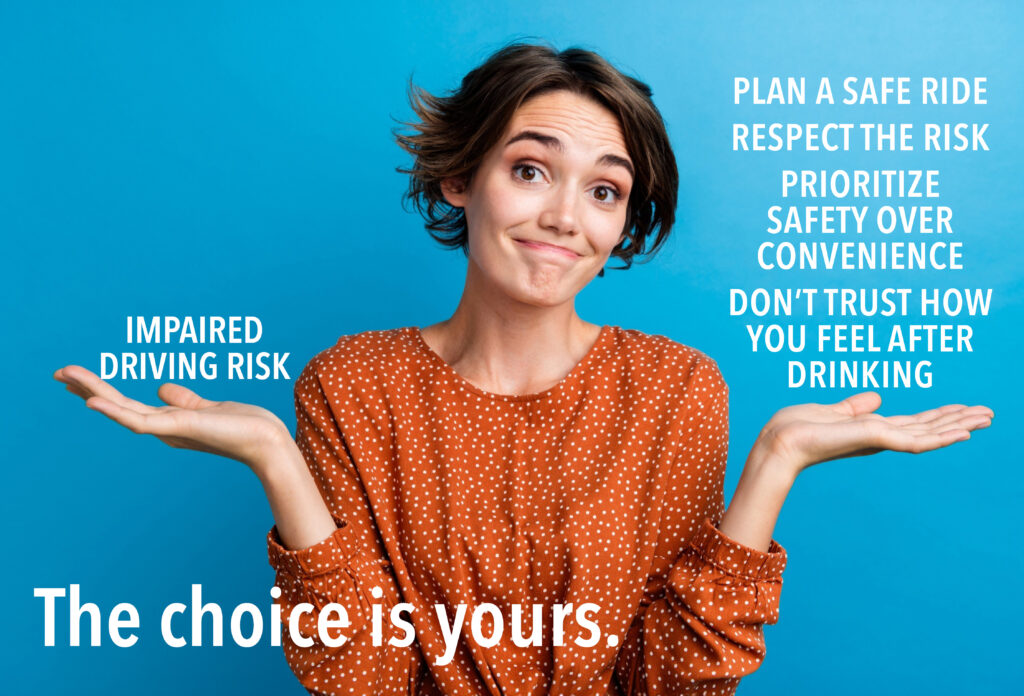
- Prioritizing convenience over safety. Your personal inconvenience is prioritized over the safety of other road users.
- Basing a decision to drive on how you feel. Alcohol impairs judgement, which means you cannot trust how you feel because you’re incapable of accurately assessing your impairment.
- Feeling like you’re fine to drive. You overestimate your ability to drive safely because you’re not aware of the impairment of your cognitive and motor skills.
Listen to that small voice within
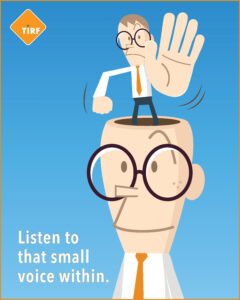 Many of us have watched someone grab their keys and hesitate for just a second or maybe have even felt that hesitation ourselves. That pause is the defining moment; each of these moments represents an opportunity to choose community safety over personal expediency and convenience. These decisions are not forced. They are choices. At every point a safer option exists, but we have to be willing to think beyond the easiest path forward for ourselves and instead prioritize what is safest for those with whom we sha re the roads. Calling impaired driving an accident erases the driver’s personal responsibility for their choices. It obscures the preventable nature of the harm. In reality, impaired driving is an intentional choice and impairment neither masks nor mitigates the responsibility of the driver who risks other people’s lives.
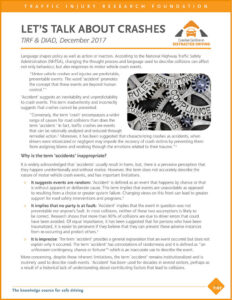
The way we talk about impaired driving shapes public perception, policy, and action. When crashes are described as accidents, it suggests randomness, something unavoidable or unforeseeable. But it has long been established that alcohol impairment increases crash risk (Peck et al., 2008; Compton & Berning, 2015). This increase is exponential as breath alcohol concentration rises and is why impaired driving is a criminal offence and not simply a traffic offence. The term crash is an accurate, factual way to describe events that result. Using this term requires that accountability be assigned and not dismissed. Hence, the widespread and consistent adoption of these terms among injury prevention and emergency services professionals who save lives and treat crash victims daily.

This isn’t about shaming, it’s about honesty. Clear language denotes harms and demands stronger prevention efforts which reinforce the belief that impaired driving behaviour must change.
If we concede impaired driving is a decision, then we must also acknowledge that the solution is equally a decision which must be repeated, reinforced, and sustained at every level of society. This means planning a ride home before leaving the house and setting expectations with friends ahead of time. It means recognizing that speaking up may feel uncomfortable, but silence carries a far greater risk.
Results from the 2025 Road Safety Monitor revealed more than half (65%) of respondents who admitted to driving when they thought they were over the legal limit were drinking with close friends and family members. So, the question remains Why aren’t we speaking up? Is the alternative of letting someone you love get behind the wheel not equally daunting? Let’s be honest, one of the benefits of having that close relationship is telling someone their behaviour doesn’t pass the sniff test; to tell them what they need to hear as opposed to what they want to hear.
The cold truth is not speaking up to a friend or loved one is also a choice; one that we will have to live with every day.
The discomfort of saying something that is hard to hear lasts minutes while the consequences of staying silent can last a lifetime. Friends don’t let friends drive impaired.
Prevention should start before the fun
 Every impaired driving crash represents an entire series of moments where a different choice could have been made. We all have a role to play, whether this choice is made by the driver, a friend, a host, or anyone who noticed the warning signs and didn’t hesitate to intervene. These moments are rarely dramatic. In truth, they are quiet, ordinary, and familiar, which is exactly why they matter. Prevention doesn’t usually look heroic; it looks like planning ahead, speaking up, or offering a ride when it would be easier to turn a blind eye. Prevention should start from the moment we decide to have a drink. Before we take our first sip, we should make a plan on how we’re getting home tonight. This could include:
- Planning your ride home before drinking or using drugs
- Budgeting for a taxi or rideshare as part of your night out
- Using public transportation when available (and if you feel safe doing so)
- Speaking up if a friend plans to drive while impaired
- Offering a safe alternative: sharing a ride, a place to stay, or help arranging transportation
Impaired driving doesn’t just happen; it’s never an accident. It is the outcome of a series of choices, and these are choices in which we have a say. Recognizing this truth doesn’t remove compassion, it strengthens accountability. It reminds us how lives lost to impaired driving were not the result of bad luck, but of risks that were known and could have been avoided.
When we name impaired driving as a choice, we also reclaim the power to prevent it. Every ride planned in advance, every uncomfortable conversation, and every moment of intervention reinforces the idea that safety is a shared responsibility.
Change doesn’t demand perfection; it requires consistency. It starts with the simple, collective understanding that impaired driving is anything but inevitable. For communities looking to kickstart initiatives about impaired driving, the IDCC has created a variety of resources to provide assistance. Visit: https://tirf.ca/projects/idcc/
This #MySafeRoadHome blog is sponsored by the Impaired Driving Coalition of Canada (IDCC): TIRF & Diageo North America formed the IDCC to tackle impaired driving in Canada.
#MySafeRoadHome blog authors: Hannah Barrett, TIRF Researcher & Program Manager; Karen Bowman, Director, Communications & Programs (Drop It And Drive®) ; and, Robyn Robertson, TIRF President & CEO work collaboratively as co-authors. Hannah is a criminologist and specializes in alcohol ignition interlock programs, wildlife-vehicle collisions, and impaired driving countermeasures. Robyn is the author of TIRF’s knowledge translation model, is well-versed in implementation strategies and operational practices across several sectors. Karen uses her writing and blogging background to help apply TIRF’s research to real-world driving, cycling and walking.
Source documents & resources:
Compton, R. P., & Berning, A. (2015). Drug and alcohol crash risk. Journal of Drug Addiction, Education, and Eradication, 11(1), 29.
Peck, R. C., Gebers, M. A., Voas, R. B., & Romano, E. (2008). The relationship between blood alcohol concentration (BAC), age, and crash risk. Journal of safety research, 39(3), 311-319.
Traffic Injury Research Foundation (2020). Steer clear of impairment. Infographic.
Traffic Injury Research Foundation (2017). Let’s Talk About Crashes.
Traffic Injury Research Foundation (2025). Road Safety Monitor 2025: Drinking & Driving in Canada https://tirf.ca/download/rsm2025-drinking-driving-canada/
Related topics:
 |
 |
 |
 |